LEAC Fume Hood Energy Monitoring Software
Laboratory Sustainability & Telemetry Infrastructure
The Lab Energy Assessment Center (LEAC) project (leac-mit.github.io) engineered networked telemetry infrastructure and assessment methodologies to track and optimize energy consumption across academic research laboratories at MIT. Serving as the Lead Technology Developer, I designed the project's website, wrote the initial core telemetry prototypes (green_net), and mentored undergraduate researchers who conducted comprehensive energy assessments across campus labs.
The Challenge: Laboratory Energy Intensity
MIT buildings containing research laboratories consume over 300% more energy per square foot than non-lab academic facilities. Variable Air Volume (VAV) fume hoods, high-powered equipment, and constant lighting draw massive electrical and HVAC loads. For example, a single open fume hood sash can draw as much conditioned air as multiple average American homes, costing thousands of dollars per year in wasted energy.
Without low-cost, automated telemetry, laboratory managers and sustainability teams lacked granular visibility into equipment power draw, unutilized open sash positions, and campus-wide energy waste.
System Architecture & Software Implementation
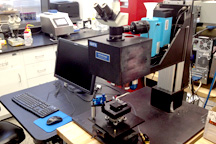
To address these challenges, I built and deployed a multi-faceted monitoring platform tailored for academic research environments:
1. Smart Outlet Network Monitoring (green_net)
- Developed Python-based telemetry scripts utilizing the Ouimeaux API to interface with smart plugs (such as WeMo Insight switches), scanning local networks, querying real-time power draw, and outputting structured time-series logs (
data.csv). - Designed the initial data logging architecture and command-line execution flows to capture high-frequency power measurements.
2. Computer Vision State Detection
- For hardwired laboratory equipment such as fume hoods and overhead lighting where inline smart plugs cannot be inserted, we incorporated lightweight computer vision pipelines to identify on/off states and sash positions.
Student Mentorship & Program Execution
Following initial prototype development, I worked closely with the team—including co-founders, EHS liaisons, and talented undergraduate researchers—to support campus-wide audits:
- Mentorship: Guided undergraduate team members (such as Dheekshita Kumar, Juan Ferrua, and Maxwell Drake) in configuring hardware, managing data logging repositories, and analyzing lab power draw.
- Collaborative Research: This work contributed to broader campus sustainability frameworks and publications, including collaborative findings detailed in Energy Reports (Becerra et al., 2018).
Grant Recognition & Impact
- MIT Green Labs Innovation Award: Recognized with the 2017 Innovation Award ($5,000) for developing sustainable campus technology.
- Actionable Telemetry: Provided free, minimally invasive energy audits and data-driven recommendations to campus research groups, establishing a scalable model for lab decarbonization.